
NEIGHBOR TO NEIGHBOR · 4 MIN READ
Your Game Partner Is Also Your Next-Door Neighbor.
The hand is over. The commentary apparently isn’t. How do you keep a partnership game from following you home?
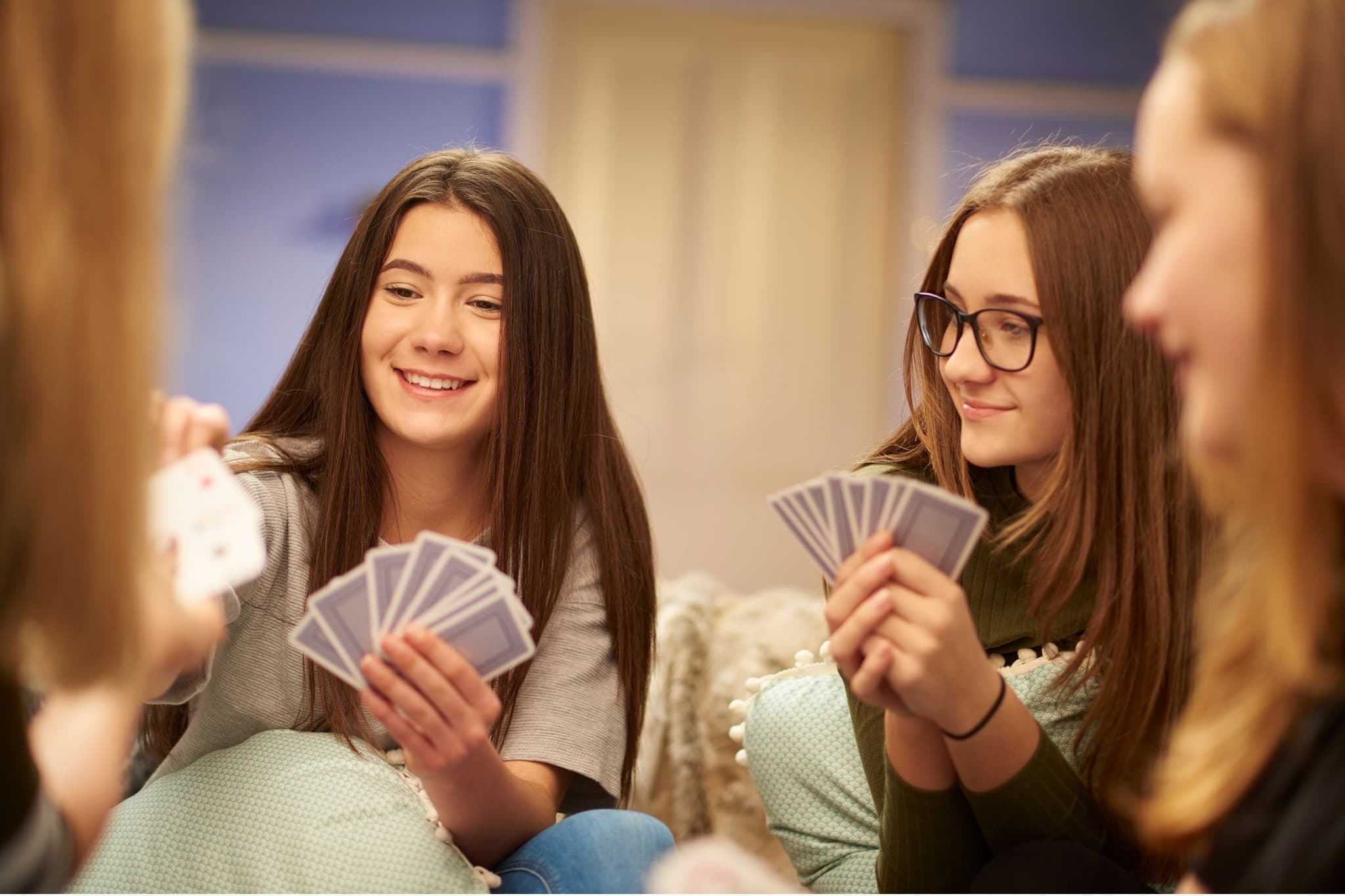
The driveway review
Imagine finishing a card game and walking home with your neighbor. You enjoyed the evening until the third explanation of what you should have played. At your gate, they begin the fourth.
To your partner, this may be an interesting discussion of strategy. To you, it may feel like receiving a performance review while trying to find your keys.
Both of you can enjoy the game and still want different things from the evening. One came to improve. One came to spend time with people. You might even switch places on a different night.
The difficulty grows when neither person says which evening they thought they were attending.
Name the kind of game before dealing
“Friendly game” does not settle much. Friendly people can care intensely about winning. “Casual” can mean anything from relaxed conversation to strict rules without prizes.
Offer something more specific: “Tonight we’re learning. We’ll play a practice round, answer rules questions, and keep advice until after each hand unless someone asks.”
For a more competitive gathering: “We’ll use the published rules, keep score, and save discussion until the hand is finished. Anyone who wants a teaching game can join Saturday’s table.”
Keep each game’s rules about information and communication intact. In a partnership card game, coaching during a live hand may reveal information or break the rules. Agree on an appropriate time for learning instead of assuming helpful intent makes all advice fair.
Ask permission for the postgame analysis
The smallest useful question is: “Would you like to talk through that hand, or leave it there?”
If the answer is yes, discuss one decision and ask what the player saw. You may learn that they misunderstood a rule, made a reasonable choice with different information, or simply chose differently.
If the answer is no, let it be no. “I’m only trying to help” does not turn unwanted instruction into a favor.
As the person receiving advice, try: “I’m happy to ask questions while I learn, but I don’t want a review after every hand.” Or, at the gate: “I’ve finished thinking about cards tonight. See you tomorrow.”
You do not have to produce a better argument about the game in order to end the conversation.
Give an irritated partner a clear signal
Sometimes the problem is less about words than the sigh, the raised eyebrows, or the long look at the score.
Describe what happened without claiming to know the motive: “When you sighed and went through my mistakes in front of everyone, I stopped enjoying the game. Please ask before giving me that kind of feedback.”
If it happens at the table, keep the immediate request short: “Let’s finish this hand and talk afterward.” A detailed dispute over tone can consume the whole room.
If somebody keeps insulting or belittling another player, the host can interrupt directly: “We can disagree about a play. We’re not going to speak to each other that way here.” Taking a break or ending the game can be appropriate if it continues.
The person on the receiving end does not have to keep playing to preserve the atmosphere.
Change the partnership without making a public case
Neighbors do not need to be permanent game partners. Rotating between completed games gives people experience with different styles, provided everyone knows the format in advance.
With a fixed partnership, speak privately: “I’d like to try playing with different partners for a while. I still enjoy seeing you, but this pairing is getting tense for me.”
A different game can help when the mismatch is specifically about shared results. Individual scoring gives each player ownership of their decisions. It will not, by itself, solve a habit of unwanted commentary.
Choose the change that addresses the actual problem. You can stop partnering with someone and still greet them warmly across the fence.
Repair the moment, not your entire reputation
If you were the person who snapped, apologize for the action: “I was sharp with you about that hand. I’m sorry. You didn’t deserve that.”
Leave out the explanation that they really should have played differently. You can discuss strategy later if they want to; an apology does not need a replay attached.
Before the next game, agree on three things: how competitive the evening will be, when advice is welcome, and what happens if somebody wants a break.
Our Spades and Bridge guides introduce two games where partnership expectations deserve a conversation.
Then give the relationship other material. Ask about the plant they moved onto the porch or the trip they mentioned. Your next conversation can be about something neither of you is trying to win.
GOOD TO KNOW
Frequently asked questions
Should we avoid competitive games with neighbors?
No. Competitive play can be enjoyable when people agree on the format and treat one another well. Be specific about rules, scoring, and whether the gathering includes teaching.
How do I stop advice without sounding ungrateful?
Try, “Thanks—I’ll ask when I want help. Right now I’d like to play this one through.” A clear preference is enough; you do not need to debate whether the advice is correct.
Can we discuss strategy during a hand?
Check the rules of the game. Live discussion can reveal information or be prohibited. Use a designated practice hand or save analysis until play is complete.
Is it rude to ask for a different partner?
You can ask respectfully and privately. An announced rotation between games may help a whole group try different partnerships without singling someone out.
What if someone keeps making personal remarks?
State the boundary and interrupt the behavior. If it continues, pause or end the game, or change who you play with. Nobody has to accept insults to keep a neighborhood activity going.