
HOW-TO GUIDE · 5 MIN READ
How to start a tool library on your block
You don't need a building or a budget — just a drill, a ladder, and five neighbors.
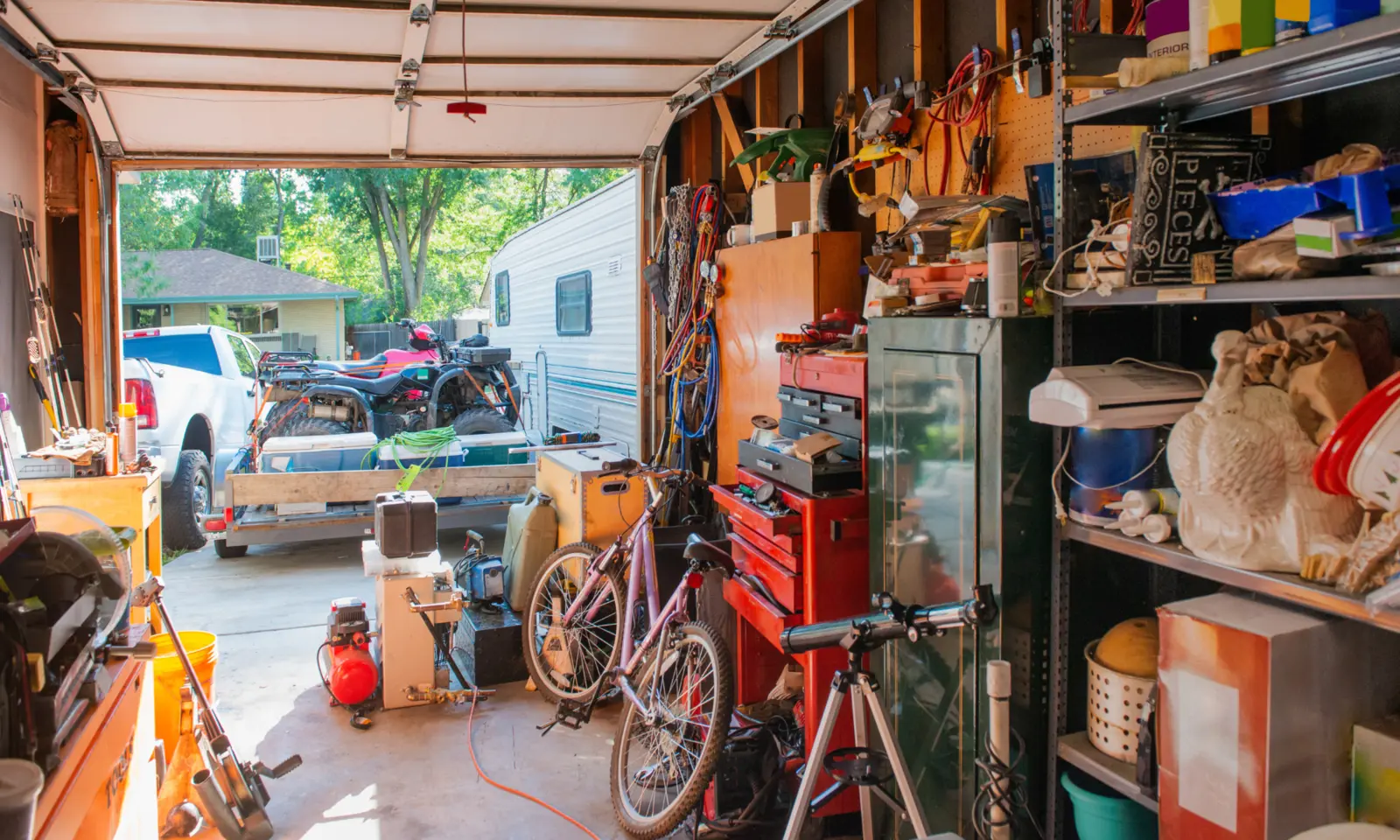
Your garage is already a library
Take a look in your garage. There's a drill you use twice a year, a ladder you climb four times, a wheelbarrow that earns its keep one weekend each spring. Now multiply that by every garage on your block. Your street owns roughly six of everything and uses none of it efficiently.
A tool library just makes that informal truth official. Here's how to start one without forming a committee.
Step 1: Inventory your own garage first
Before recruiting anyone, walk through your garage and list what you'd happily lend: drill/driver, ladder, wheelbarrow, pressure washer, extension cords, hedge trimmer, sewing machine, carpet cleaner, camping gear, the tile saw from the bathroom project. Write it down. This list is your opening offer — it makes the ask concrete instead of abstract.
Step 2: Find your first five
You don't need the whole block. You need five neighbors you'd trust with your drill. Knock, text, or catch them at the mailbox: 'I'm putting together a little tool-sharing thing for our street — I've got a ladder and a pressure washer on the list. Anything you'd add?' Five people with five garages is a serious inventory.
Step 3: Agree on three rules. Only three.
- Borrow for a weekend, not a season. A week max unless everyone agrees otherwise.
- Return it like you found it — clean, charged, working. If it breaks on your watch, you repair or replace it.
- Ask, don't take. A quick message beats a surprise empty spot in the garage.
That's it. No fines, no spreadsheets, no membership cards. You can add sophistication later; most libraries never need it.
Step 4: Make one shared list
One place where everyone can see what's available and who has it. A post in your Nayborlee community can start the list — offers stay in the group, requests are easy to make, and it's only your people. Update the post as things change. A group chat or a sheet of paper works too. The medium matters less than the single source of truth.
Step 5: Make the first borrow easy
Here's the secret: don't wait for someone to need something. Offer first. 'I'm running the pressure washer Saturday if anyone wants their driveway done too.' The first successful borrow breaks the awkwardness, and after that the library runs itself.
What not to do
Don't buy anything to start. Don't write bylaws. Don't appoint a treasurer. The fastest way to kill a tool library is to organize it like an institution before it's earned the right to be one. Start scrappy; formalize only when something actually breaks.
The real product
The tools are the excuse. The product is the knock on the door, the five-minute chat on the driveway, the neighbor you now know by name. A ladder is just a ladder — until it’s the reason you met the people on your street.
GOOD TO KNOW
Frequently asked questions
How many people do we need to begin?
Start with five willing neighbors. A few concrete offers make the idea easier to understand than a call for everyone to sign up.
Do we need to buy shared tools?
No. Begin with things people already own and are comfortable lending.
How should we track a borrowed tool?
Agree who has it and when it will come back. Keep one shared list and update it as tools move.
What if a tool breaks?
Agree on the repair or replacement rule before the first borrow, and talk directly with the owner if something goes wrong.